

On 11 November 2025, a suicide bomber detonated explosives near the District Judicial Complex in Islamabad’s G‑11 sector, killing 12 people and injuring dozens more in one of the capital’s deadliest attacks in recent memory. This shocking act of violence — targeting a seat of justice and law — sent ripples across Pakistan and reignited urgent debates about terrorism, border security, and counter‑terror strategies.
In the weeks since that tragic day, authorities have made a significant breakthrough: Pakistan’s federal government announced the arrest of four militants linked to the attack. The arrests mark a major development in the ongoing investigation and offer insight into the capabilities and challenges of local and regional counter‑terrorism operations.
📍 Background: The Islamabad Suicide Bombing
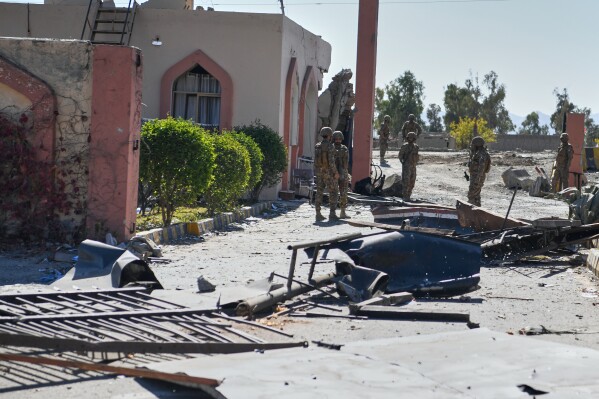
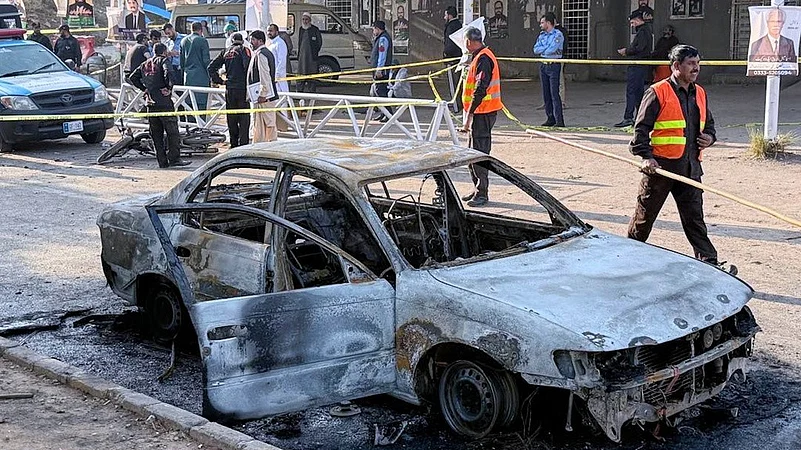
The suicide attack occurred outside the Islamabad District Judicial Complex, striking at one of the city’s busiest judicial hubs. The bomber detonated his device near a police vehicle after failing to reach the interior of the courthouse, resulting in numerous casualties among civilians, law enforcement officers, and legal professionals.
The bombing was especially jarring because Islamabad — unlike some other regions of Pakistan — had not seen a suicide bombing of this scale in several years. It served as a stark reminder that militants remain capable of planning and executing devastating attacks even in highly secured urban centers.
👮♂️ The Arrests: Who Was Detained?
According to official statements, one of the detainees — Sajidullah, alias “Sheena” — confessed during interrogation that he had played a central role in handling and preparing the bomber. Investigators say Sajidullah received orders from a senior TTP commander known as Saeed‑ur‑Rehman, also referred to as Daadullah, who is believed to be hiding in Afghanistan.
Saeed‑ur‑Rehman reportedly used encrypted messaging applications like Telegram to coordinate the operation, sending photos of the suicide bomber and directing his operatives to arrange logistics, accommodation, and the explosive vest used in the attack.
📌 How the Plot Was Executed
Investigators outlined a chilling sequence leading up to the blast:
- The alleged suicide bomber is said to have crossed into Pakistan from Afghanistan, entering the country through the porous border.
- On arrival, Sajidullah helped arrange his stay near Islamabad, indicating premeditated coordination rather than a spontaneous act.
- A suicide jacket — reportedly collected from a graveyard in Peshawar’s Akhun Baba area — was fitted and transported to the capital under direction from TTP leadership.
- The bomber subsequently detonated his device near the judicial complex, striking at law enforcement and civilians.
Officials say the entire cell involved, including planners and handlers, has now been taken into custody — a development authorities describe as a “critical breakthrough” in the case.
🧠 What This Reveals About Militant Networks
The arrests underscore a significant challenge that Pakistan has faced for years: the transnational nature of militant networks, especially the TTP’s operational links in neighboring Afghanistan.
The government’s investigations suggest that the attack was orchestrated by militants based outside Pakistan, communicating via encrypted apps and leveraging cross‑border connections to plan the operation.
This detail has important implications:
- Border security and intelligence cooperation with neighboring countries remains a core priority for Islamabad.
- Encrypted online communication platforms have become tools for militant coordination, complicating tracking and prevention efforts.
- Militants are evolving their tactics, blending locally sourced operatives with external planning and direction.
📍 Pakistan’s Government Response
In response to the attack and subsequent arrests, the federal government, intelligence agencies, and law enforcement bodies have reiterated their commitment to counter‑terrorism. The arrests were made through a joint operation by the Intelligence Bureau (IB) and the Counter‑Terrorism Department (CTD) — highlighting coordinated efforts across security institutions.
Authorities have also emphasized:
- The need for continued intelligence gathering and cooperation across federal and provincial agencies.
- Expanding surveillance and monitoring of suspect networks.
- Enhancing border security in coordination with regional partners.
While Pakistan has faced periodic militant violence for decades, officials assert that acts of terrorism will not undermine the state’s resolve to uphold stability and public safety.
🕊️ Public Impact and National Discourse
The Islamabad bombing — and the subsequent arrests — resonated deeply across the country. For many Pakistanis, the attack was a stark reminder that terrorism remains a persistent threat, even in areas previously considered relatively secure.
Public reactions have included:
- Condolences and solidarity messages for the victims and their families.
- Renewed calls for stronger counter‑terror strategies, both domestically and with international cooperation.
- Debates about social media monitoring and the role of digital platforms in preventing extremist propaganda and planning.
The incident also sparked discussions about how best to protect critical infrastructure, including courts, government institutions, and public spaces.
📉 What Comes Next? Investigations and Justice
With the four militants now in custody, authorities say further interrogations and investigative work are ongoing. More arrests are possible as Pakistan seeks to dismantle any remaining cells connected to the attack.
The case is expected to proceed through Pakistan’s legal system, with prosecutors working to build strong criminal cases against all suspects.
At the same time, law enforcement agencies continue to analyze how the plot developed, where operational gaps may have existed, and how future threats can be mitigated — lessons critical for protecting citizens and upholding national security.
🚨 Conclusion: A Fragile Peace Under Scrutiny
The arrest of four militants in connection with the Islamabad court suicide bombing is both a victory and a warning. It shows that Pakistan’s security apparatus can respond swiftly and decisively — but it also highlights the continued adaptability of militant organizations and the complex, cross‑border nature of modern extremist threats.
As investigations continue and the legal process unfolds, Pakistan faces the twin challenges of ensuring justice for victims and strengthening its defenses against future attacks.
In a world where security landscapes evolve rapidly, the Islamabad case serves as a potent reminder: maintaining peace requires vigilance, cooperation, and resolute action at every level — from local communities to international allies.