

In a bold and highly publicized move that has captured international attention, Pakistan’s top military officer — General Syed Asim Munir — has delivered a stark message to Afghanistan’s ruling Taliban government: decide where your allegiance lies — with Pakistan or with the militant group Tehrik-e-Taliban Pakistan (TTP), referred to in Pakistani official circles as “Fitna al-Khawarij.”
This statement, issued from the military headquarters in the garrison city of Rawalpindi, marks one of the strongest and most public challenges yet in the fraught relationship between Islamabad and Kabul — a relationship battered by mutual distrust, cross-border violence, and persistent terrorist threats.
Let’s unpack what this ultimatum means for Pakistan, Afghanistan, and the broader region.
🔥 “Choose Between Pakistan and Fitna al-Khawarij” — The Message
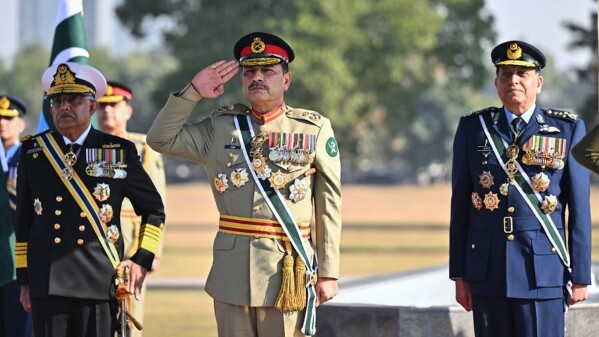
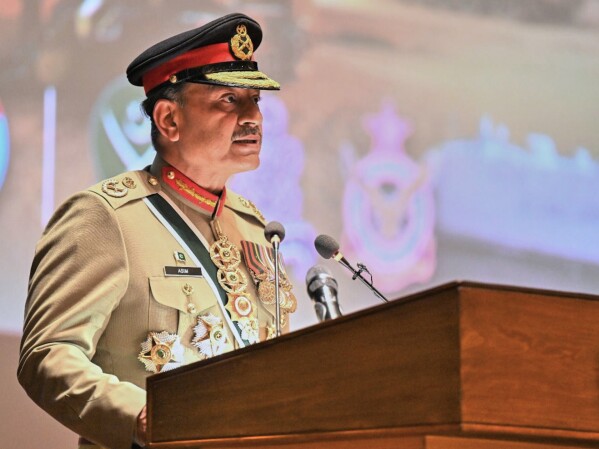
At a high-profile ceremony launching Pakistan’s newly integrated Joint Military Command, General Asim Munir addressed senior military officers and made his position crystal clear: Afghanistan’s interim government must choose between maintaining ties with Islamabad or backing militant elements like the TTP.
Munir said a “clear message” had already been delivered to Kabul. According to the official statement, it underscored Islamabad’s rejection of any support — direct or indirect — for the TTP, which Pakistan labels Fitna al-Khawarij — a term drawn from early Islamic history to describe rebels deemed outside the fold of Islam.
This is not rhetoric for the sake of headlines. The language — especially the use of Fitna al-Khawarij — reflects Islamabad’s determination to delegitimize the TTP not just as a security threat but as a distortion of religious discourse and a menace to national stability.
📌 Why Is Pakistan’s Military Taking This Hard Line Now?
The backdrop to General Munir’s remarks involves a complex interplay of security concerns:
1. Persistent TTP Violence:
The TTP has resurfaced in recent years as a deadly force inside Pakistan, launching high-casualty attacks against security forces, public officials, and civilians. Many of these assaults have been traced to militants who allegedly transit through or operate from Afghan territory — allegations Kabul denies.
2. Strained Islamabad-Kabul Ties:
Relations have deteriorated significantly since October, when a series of border clashes killed dozens of soldiers, civilians and suspected militants on both sides of the Pakistan-Afghanistan frontier. While a Qatar-mediated ceasefire mostly held, recent rounds of diplomatic talks in Istanbul failed to yield a breakthrough.
3. Reinforcing National Security:
Pakistan’s newly created Joint Military Command — bringing the army, navy and air force into closer strategic alignment — reflects Islamabad’s view that national security must be defended with unprecedented unity and clarity of purpose. Munir’s call on Afghanistan fits within that broader imperative.
🤝 Is This a Real Ultimatum — Or Diplomatic Signaling?
While the phrasing of the ultimatum sounds uncompromising, analysts see this move as a combination of diplomacy and pressure:
- Strong Signaling: Munir’s remarks signal that Pakistan will no longer tolerate any ambiguity about Afghanistan’s stance on terrorism and militant networks.
- Diplomatic Leverage: The ultimatum also aims to test Kabul’s willingness to rein in militant groups that Islamabad blames for insurgency inside Pakistan.
- Domestic Assurance: At home, it reinforces the narrative that Pakistan’s military leadership is proactive in protecting national security — particularly important in a country that has borne the brunt of decades of militant violence.
📍 Afghanistan’s Response — Or Lack Thereof
As of now, there has been no public response from the Afghan Taliban government to General Munir’s ultimatum. Kabul has historically taken the position that the TTP is an internal Pakistani issue and not something Afghan authorities should be held responsible for — a stance that Islamabad strongly rejects.
This diplomatic silence is significant. It leaves open a host of questions:
- Does Kabul acknowledge the security concerns Pakistan has raised?
- Is the Afghan government willing or able to constrain groups like the TTP within its borders?
- Or does the interim leadership see this as a matter of internal politics rather than bilateral security cooperation?
These questions remain unresolved, and the diplomatic vacuum could have broader implications for peace and stability in South and Central Asia.
⚠️ Why TTP Is So Central to Pakistan’s Security Strategy
Pakistan’s government and military have repeatedly highlighted the threat posed by the Tehrik-e-Taliban Pakistan (TTP) — not just as a security issue, but as a factor shaping foreign policy.
Islamabad describes the TTP as an extremist group with ideological links that extend beyond Pakistan’s borders. By labeling them Fitna al-Khawarij, Pakistani authorities are not only condemning their actions but also attempting to frame them as religious deviants whose ideology has no legitimate grounding in mainstream Islamic thought.
Importantly, this framing is meant to:
- Undermine the TTP’s claim to religious authority.
- Reduce any local sympathy for the group.
- Strengthen Pakistan’s narrative that its fight against militancy is both security-driven and principled.
🧠 The Broader Regional Security Context
General Munir’s ultimatum comes at a time when regional security dynamics are evolving rapidly:
- Border Security: Pakistan has invested heavily in fortifying its border with Afghanistan, including fencing large segments and tightening monitoring mechanisms.
- Diplomatic Engagements: Pakistan has engaged in multiple rounds of talks with Afghan authorities — in places like Doha and Istanbul — to ease tensions and build cooperation, though results have been limited.
- International Pressures: Global powers and regional actors, including China, the U.S., and Gulf states, have at times stepped into Islamabad-Kabul discussions to encourage stability and counterterrorism coordination.
This broader environment means that Pakistan’s ultimatum is not just a bilateral message — it’s a regional wake-up call about the intersection of diplomacy, security, and militant networks.
🕊️ What’s Next? Possibilities and Risks
- Diplomatic De-escalation: Afghanistan might respond with specific actions to curb TTP activity — potentially opening new avenues for cooperation.
- Standoff Continues: Kabul could maintain its stance, leading to ongoing tensions along the border and in diplomatic forums.
- Escalation of Rhetoric: If militant violence surges or if Afghanistan rejects Islamabad’s demands outright, Pakistan could escalate its pressure — potentially with military or economic measures.
Whatever happens next, it’s clear that Pakistan has raised the stakes in its relations with Afghanistan — shifting the conversation from mere rhetoric to a strategic choice: alignment with Islamabad or association with militants like the TTP.
📌 Final Thoughts
General Asim Munir’s ultimatum isn’t just another headline — it is a reflection of Pakistan’s evolving security strategy in a tense regional environment. By framing its demands in stark terms and invoking powerful symbolism like Fitna al-Khawarij, Islamabad has shown that it is prepared to push back against what it views as entrenched threats to its sovereignty.
For Pakistan, this is about more than just diplomatic posturing — it’s a test of whether neighbouring Afghanistan is willing to act responsibly on security concerns that have deep consequences for peace and stability across South Asia.