

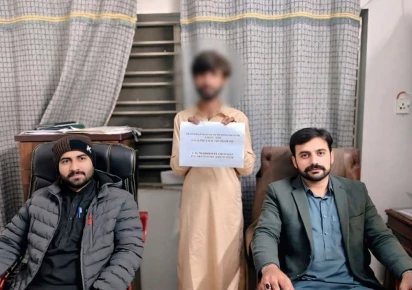
In a major breakthrough against cyber fraud, Pakistan’s National Cyber Crime Investigation Agency (NCCIA) has arrested a man in Rawalpindi for allegedly orchestrating a sophisticated online scam that targeted politicians, public figures, and ordinary citizens by impersonating officials linked to a fake United Nations mission.
The case has sent shockwaves across political and digital circles, highlighting how online deception is becoming increasingly complex—and dangerous—in Pakistan’s rapidly expanding digital landscape.
🕵️ The Arrest That Exposed a Sophisticated Scam
According to officials, the suspect was apprehended in Rawalpindi following a detailed cyber investigation that uncovered an elaborate network of fake online identities, forged documents, and impersonation tactics.
The accused allegedly posed as a representative of a non-existent UN-affiliated mission, using official-sounding titles, counterfeit logos, and fabricated email addresses to gain the trust of his targets. Authorities confirmed that a formal case has been registered, while several other individuals linked to the scheme are now under investigation.
🌐 How the Fake UN Mission Scam Worked
Investigators revealed that the fraudsters used social media platforms, email correspondence, and messaging apps to contact their targets. The scam typically involved:
- Claiming affiliation with an international UN mission
- Offering diplomatic roles, security coordination, or investment facilitation
- Requesting sensitive personal information
- Demanding “processing fees” or “security clearances”
By exploiting the credibility associated with international organizations, the suspects were able to deceive victims across Pakistan.
🏛️ Politicians Among the Targets
One of the most alarming aspects of the case is that politicians and public office holders were among those targeted. Sources suggest the scammers attempted to exploit political ambitions, offering fake international exposure or advisory positions under the guise of a UN-backed initiative.
Cybercrime officials in Rawalpindi stated that while some potential victims became suspicious early on, others were drawn in by the professional presentation and authoritative language used by the accused.
👥 Ordinary Citizens Also Affected
Beyond politicians, the scam also affected ordinary citizens, including professionals, job seekers, and business owners. Many victims reportedly believed the scheme offered legitimate international opportunities or humanitarian roles.
Authorities said the fraud preyed on:
- Aspirations for global recognition
- Lack of awareness about official UN recruitment processes
- Trust in digital communication
Several victims have since approached law enforcement to record statements and provide evidence.
💻 Digital Evidence Seized in Rawalpindi
During the arrest in Rawalpindi, investigators seized multiple electronic devices, including laptops and mobile phones. Forensic analysis reportedly uncovered:
- Fake UN mission websites
- Dozens of impersonated email accounts
- Forged appointment letters
- Communication records with victims
Officials believe the digital trail will help identify additional accomplices and uncover the full scale of the operation.
⚖️ Legal Action and Charges Filed
The NCCIA has registered a formal case under Pakistan’s cybercrime and fraud laws. Authorities confirmed that charges include:
- Online impersonation
- Electronic fraud
- Identity theft
- Misrepresentation of international organizations
Legal experts say the case could set a significant precedent for tackling high-profile cyber scams originating from urban centers like Rawalpindi.
🚨 Rising Cybercrime Concerns in Rawalpindi
Rawalpindi has seen a noticeable increase in reported cybercrime cases in recent years, reflecting broader national trends. Experts warn that scammers are becoming more technologically savvy, using advanced methods to appear legitimate.
Cybersecurity analysts stress that:
- Fake international affiliations are a growing scam tactic
- Political figures are increasingly being targeted
- Public awareness remains limited
Authorities say strengthening cyber vigilance is now a top priority.
📢 Official Warning to the Public
Following the arrest, officials issued a strong warning to the public, urging citizens to remain cautious of unsolicited online offers—especially those claiming international or diplomatic affiliations.
“No legitimate UN mission or international body asks for fees or personal information through unofficial channels,” an NCCIA spokesperson said.
Residents of Rawalpindi and across Pakistan were advised to verify credentials through official websites and report suspicious activity immediately.
🧠 Experts Emphasize Digital Literacy
Cybercrime experts argue that combating such scams requires more than arrests. They emphasize the need for:
- Digital literacy campaigns
- Public education on online verification
- Stronger platform-level monitoring
They also called on politicians and public officials to exercise caution when engaging with unfamiliar online entities.
🔍 What Happens Next?
Authorities are now expanding the investigation to identify other members of the network. Officials confirmed that several suspects are already on the radar, with potential arrests expected in the coming days.
International cooperation may also be sought if evidence suggests cross-border digital activity.
🏙️ Rawalpindi at the Center of Cybercrime Enforcement
The successful arrest highlights Rawalpindi’s growing role as a hub for cybercrime enforcement. With specialized units and digital forensic capabilities, the city has become central to Pakistan’s efforts to curb online fraud.
Law enforcement officials believe this case will encourage more victims to come forward and help dismantle similar schemes operating in the shadows.
📝 Conclusion
The arrest of a man in Rawalpindi for allegedly running a fake UN mission scam marks a significant step in Pakistan’s fight against cyber fraud. By targeting politicians and ordinary citizens alike, the scheme exposed vulnerabilities in digital trust and verification.
As investigations continue, the case serves as a powerful reminder that in the digital age, vigilance is essential. With stronger enforcement, increased awareness, and public cooperation, authorities hope to curb the growing threat of online impersonation and restore confidence in digital communication.