
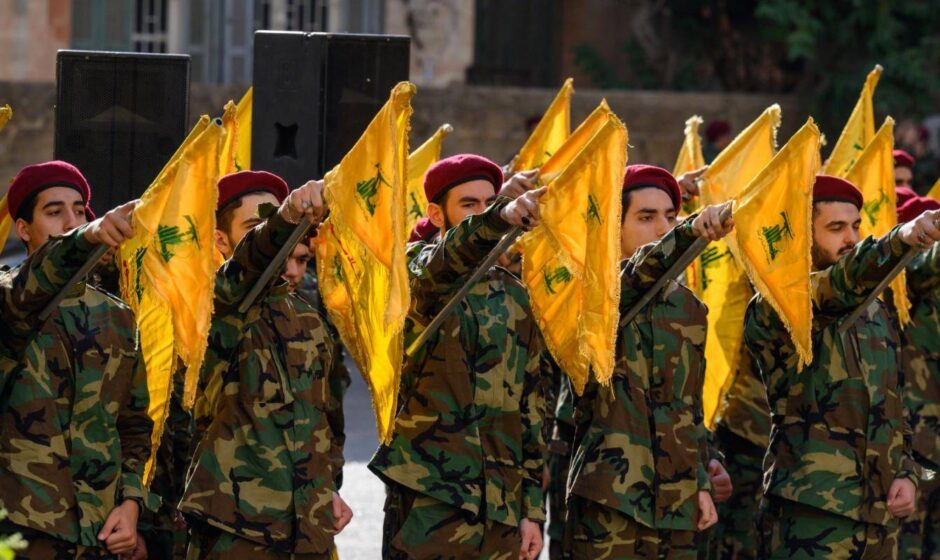

In a recent interview with Saudi news outlet Al Arabiya, Lebanon’s Foreign Minister Youssef Rajji made a strikingly blunt admission: “Hezbollah won’t hand over its weapons without an Iranian decision.” For a diplomat, such candor is rare. But in Lebanon’s deeply constrained political reality, it was also refreshingly honest.
Rajji merely voiced what many Lebanese already believe—and what Hezbollah’s own leadership quietly confirms through its actions. If Hezbollah were truly a Lebanese decision-maker alone, its weapons might already be subject to national debate. Instead, they remain firmly beyond the reach of the state. The reason is simple: Hezbollah’s arms are not Lebanese assets; they are Iranian leverage.
The Myth of Independent Resistance
Hezbollah has long framed itself as a “national resistance” movement, born to defend Lebanon from Israeli aggression. That narrative once resonated. Today, it rings increasingly hollow.
If Hezbollah’s weapons were solely about defending Lebanon, they would be integrated into a national defense strategy under state authority. Instead, they exist outside the Lebanese army, outside parliament, and outside democratic accountability.
Hezbollah’s leader Naim Qassem has repeatedly insisted that the group will not disarm—regardless of internal pressure, economic collapse, or diplomatic isolation. That insistence raises a critical question: Why would a Lebanese party prioritize weapons over the survival of the Lebanese state itself?
The answer points east—to Tehran.
Iran’s Strategic Asset, Not Lebanon’s Shield
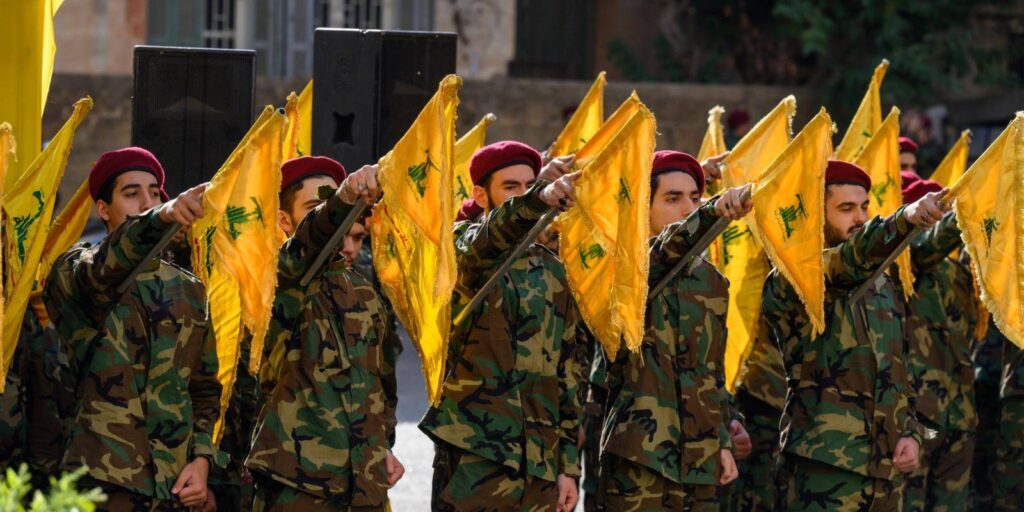
Hezbollah is Iran’s most successful foreign proxy. Built, armed, trained, and financed by Tehran, the group is not just an ally—it is a cornerstone of Iran’s regional deterrence strategy.
Through Hezbollah, Iran achieves what no conventional military deployment could:
- A permanent frontline with Israel
- Strategic depth without territorial risk
- Leverage over Lebanese politics
- A bargaining chip in nuclear and regional negotiations
Disarming Hezbollah would mean Iran voluntarily surrendering one of its most powerful tools in the Middle East. No rational strategist does that without extracting a significant price.
Why Lebanon Cannot Decide Alone
Lebanon’s state institutions are weak, fragmented, and financially bankrupt. The Lebanese army—widely respected but under-resourced—cannot confront Hezbollah militarily. Political consensus is impossible when one party holds superior firepower.
That reality strips Lebanon of sovereignty in practice, even if it retains it on paper.
Foreign Minister Rajji’s statement did not undermine Lebanon’s dignity—it exposed the truth. The decision to disarm Hezbollah does not lie in Beirut, but in Tehran.
And Hezbollah knows it.
The Cost of Armed Autonomy
Hezbollah’s insistence on keeping its weapons has had devastating consequences for Lebanon:
- International isolation
- Economic sanctions
- Loss of foreign investment
- Repeated security escalations
- Diplomatic paralysis
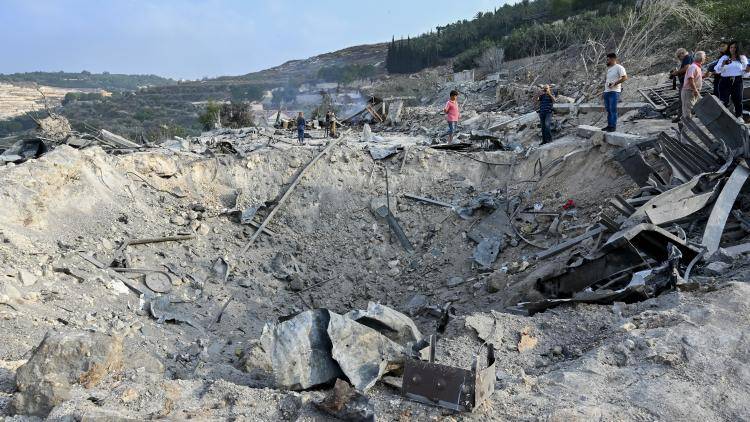
Every time Hezbollah acts independently—whether in Syria, against Israel, or in regional messaging—Lebanon pays the price.
Yet Hezbollah’s leadership shows little concern for this cost. Why? Because the group’s strategic priorities are not aligned with Lebanon’s survival—but with Iran’s regional ambitions.
A Hostage to Regional Calculations
Iran does not view Hezbollah as a Lebanese party but as part of a broader axis stretching from Tehran to the Mediterranean. Hezbollah’s weapons are tied to:
- Iran’s nuclear negotiations
- Its confrontation with Israel
- Its rivalry with Gulf states
- Its influence in Syria and Iraq
As long as these conflicts remain unresolved, Hezbollah’s arms remain non-negotiable.
Lebanon, meanwhile, becomes collateral damage—a holding ground for weapons it cannot control.
Why Pressure on Hezbollah Alone Fails
International actors often demand that Lebanon “rein in” Hezbollah. This demand ignores reality.
You cannot pressure a local actor to surrender weapons when the decision-maker sits in another capital. Sanctions, condemnations, and diplomatic isolation aimed solely at Lebanon only weaken the state further—ironically strengthening Hezbollah’s narrative that it alone can protect the country.
Disarmament without Iran’s consent is a fantasy.
What Would Make Iran Say Yes?
If only Iran can disarm Hezbollah, the logical follow-up is uncomfortable but necessary: What would Iran gain from doing so?
Possible incentives could include:
- Security guarantees regarding Israel
- Sanctions relief
- Recognition of regional influence
- Inclusion in a broader Middle East security framework
None of these are simple. All require painful compromises. But pretending Hezbollah can be disarmed through Lebanese dialogue alone avoids the harder truth: this is a regional problem, not a domestic one.
Lebanon’s Tragic Paradox
Lebanon is trapped in a paradox. To recover economically, it needs stability and sovereignty. To achieve sovereignty, it must control weapons. To control weapons, it needs a decision from Iran—whose interests are best served by Lebanon’s instability.
This cycle is not accidental. It is structural.
As long as Hezbollah’s weapons exist outside state authority, Lebanon will remain a state in name but not in function.
Breaking the Illusion
Youssef Rajji’s statement mattered because it broke an illusion—one that has long paralyzed honest debate in Lebanon. Acknowledging Iran’s role is not surrender; it is clarity.
Only by recognizing where power truly lies can meaningful diplomacy begin.
Pretending Hezbollah is fully Lebanese only delays solutions and deepens collapse.
Conclusion
Hezbollah will not disarm because Lebanon asks. It will not disarm because the international community demands it. It will not disarm because of economic ruin or political pressure.
Hezbollah will disarm only if Iran decides that keeping its weapons is no longer worth the cost.
Until then, Lebanon remains hostage to a regional power struggle it did not choose—and cannot escape alone. The path to sovereignty does not run through denial, but through realism. And realism begins with a hard truth: the keys to Hezbollah’s arsenal are not in Beirut. They are in Tehran.